The periodic table of the AI stack
Twenty elements, five families, four levels of maturity. Each one is a thing you can buy, build or skip — explained for people who run a business rather than a lab, and scored across the tools we audit independently. No course fee, no signup, no upsell.
Not sure where to start?
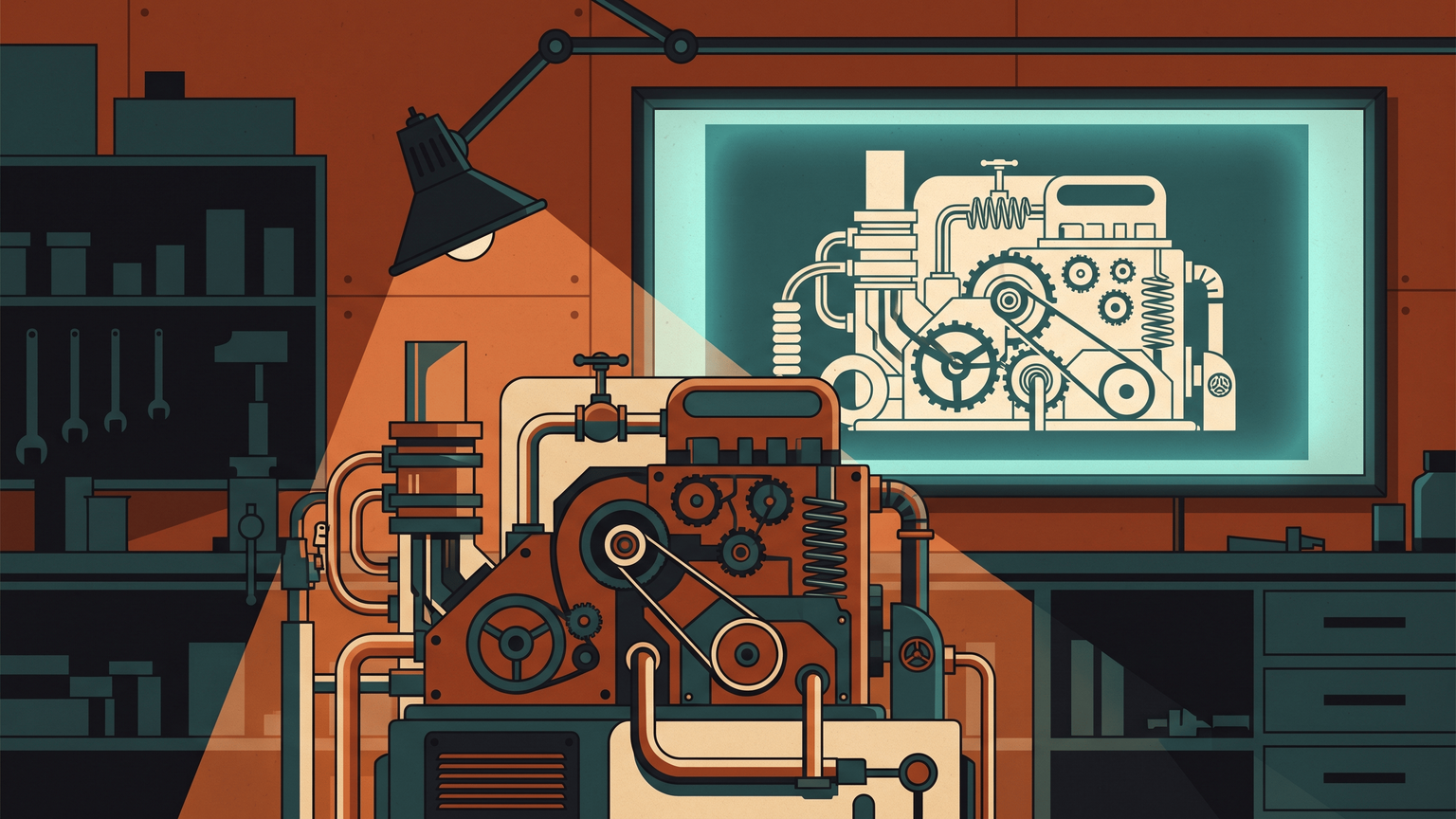
Bones & Bolts
An AI comic for young readers, starring Rex — the hero with X-ray eyes who looks inside the machines and shows how AI really works. Bones first, bolts next: when the robots arrive, Rex will be ready. First issue in the works.
How to read the table
Columns are families — what the element is for. Rows are maturity: Primitives are the pieces everything else is built from, Compositions combine them, Deployment is what you actually run, Emerging is where the ground is still moving. An element sitting in Emerging is not a reason to avoid it; it is a reason to ask harder questions and sign shorter contracts.
The table is v1.0 and is documented in full, including what we changed from IBM's original and why.